
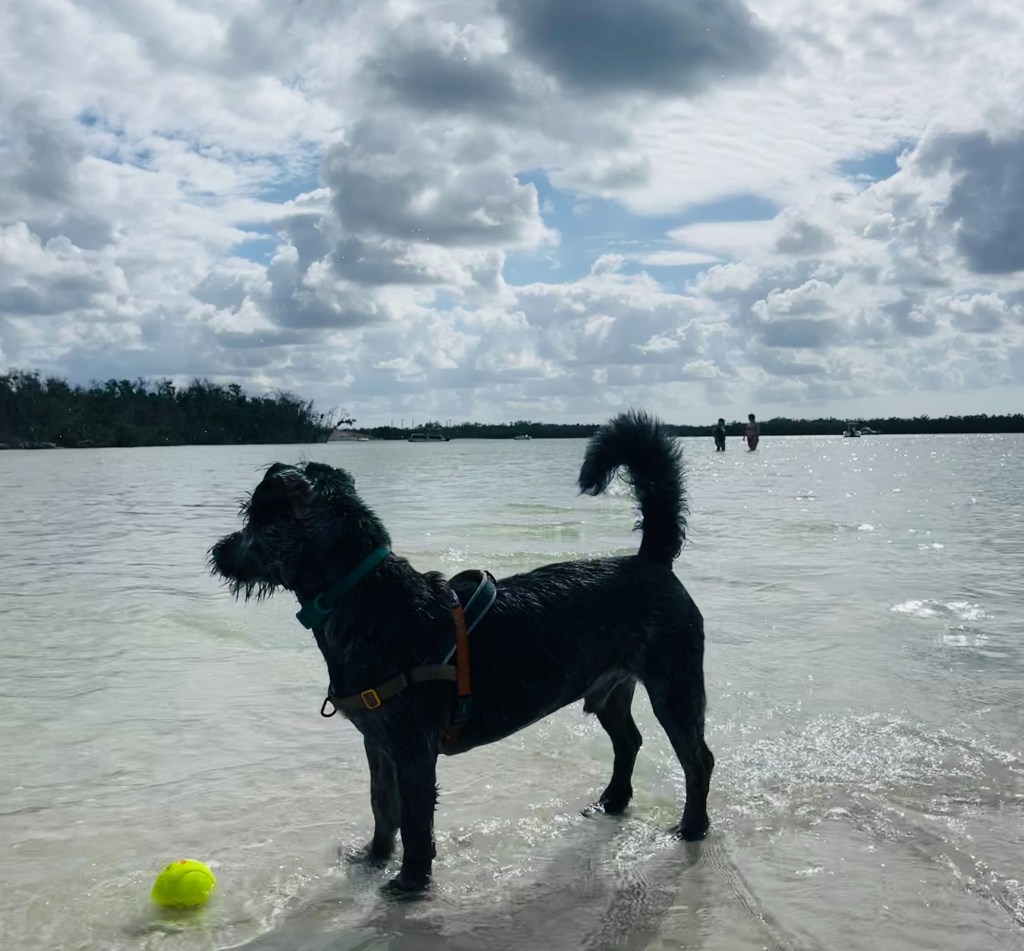
I was at the dog park the other day.
Yes! I got a puppy! And, yes, he and I frequent the local dog park now.
He’s a very, very cute, what I like to call, Sour Patch Dog. Sometimes he’s sour–like when he barks at me without reason, or begins a cat and mouse chase when it’s time for his afternoon walk, or when he stops eating his chicken-flavored kibble and instead prefers only the finest wet food du jour. OR, when he vacuums unidentified objects from the street into his mouth, leaving me to retrieve everything from bird feces to used bandages from his teeth. But then, other times, he’s sweet. He’s snuggly. He’s shy. He makes me smile.
Aka, he’s a puppy.
And his name is Barley.

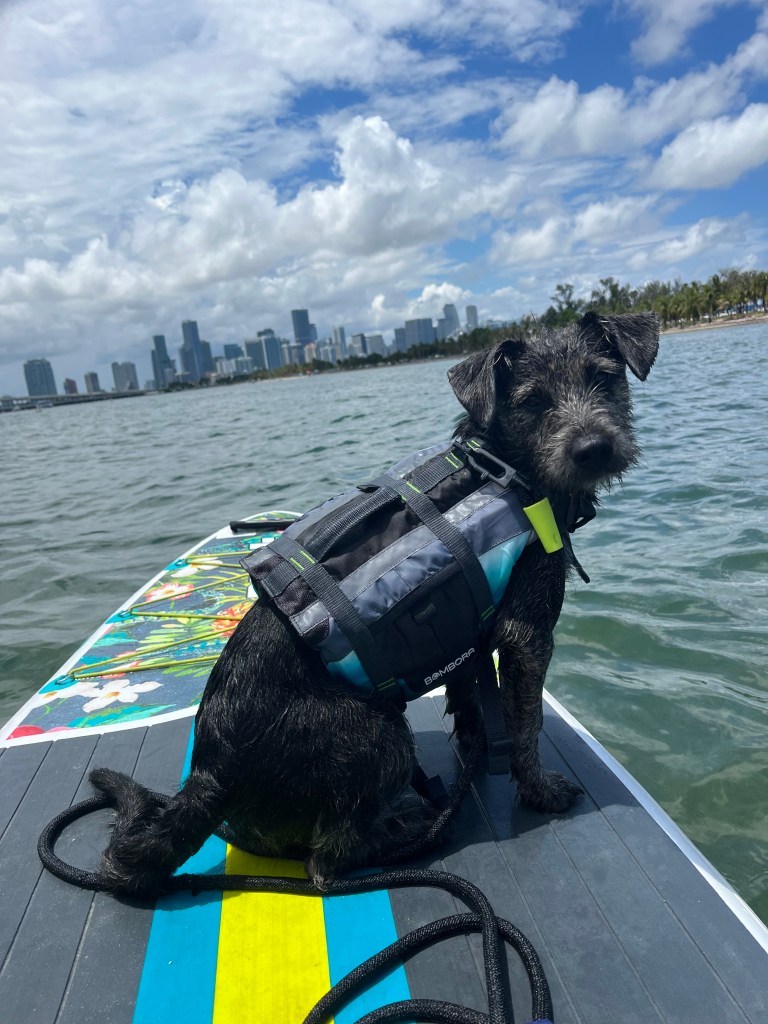
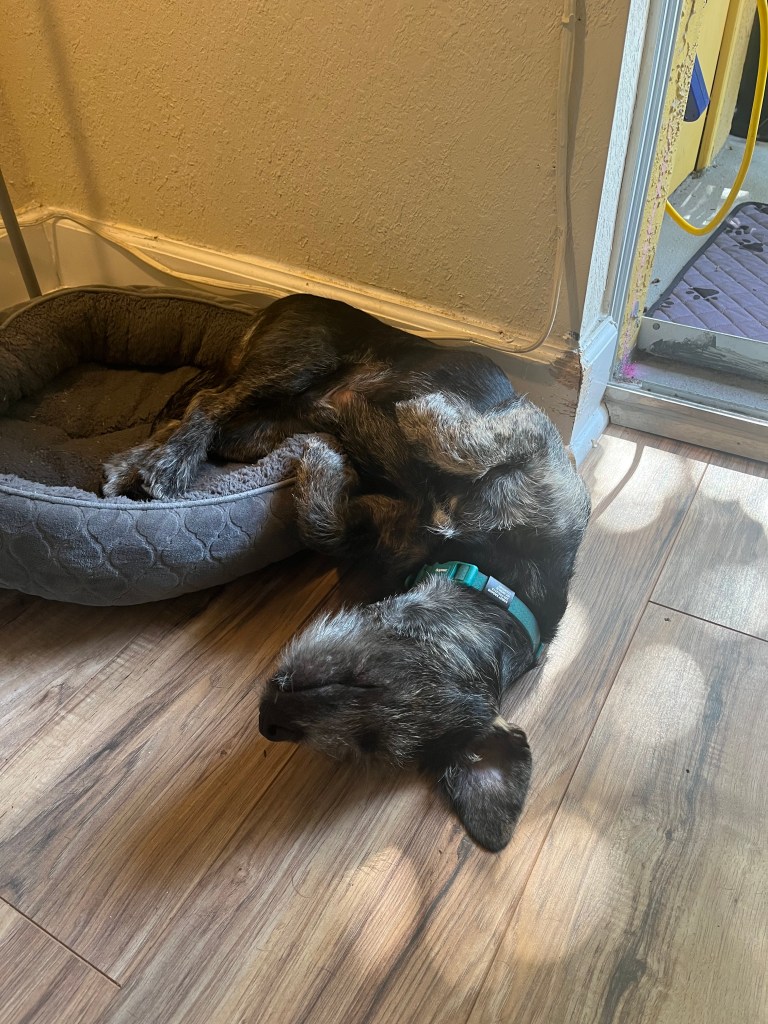
Barley and I visited the South Miami dog park the other day, and while he was rolling around on the coarse astro turf with hunting dogs–English Pointers, Vizslas, and Mastiffs–much, much larger than his exceptionally long, corgi-like torso, stalky and stumpy dachshund-esque legs, mildly scruffy and schnauzer-resembling beard–I was indulging in mindless chit-chat with the other dog owners.
It’s no surprise, that after marveling at my little pup wrestle with the big dogs, I was asked out of curiosity: “What kind of dog is he?”
What kind of dog is he?
A simple question. A simple, common question. Yet, I must be honest, I instantly felt resistance when asked this.
What kind of dog is he?
Well, besides the fact that I actually didn’t quite know, the deeper burning resistance in me stemmed from a different thought: Why did it matter? Why was this stranger being nosey? What was Barley’s, clearly complex and immediately unidentifiable, breed going to shed light on in our circumstance at the dog park? I admit, I was incredibly annoyed at this simple, common stranger trying to continue a conversation with me.
What kind of dog is Barley? To answer truthfully, I would have had to say: well, he’s a Sour Patch Dog. He emigrated from the Caribbean Islands at 2-months old and found his way to me 6-weeks later. He’s an excitable puppy, who’s very curious yet sometimes timid, and he’s a divine mezcla of several (several dozen) dog breeds. Because, as the story goes, Sir… our pokémon pups have been inter-breeding for quite some time now, that I’d actually be curious to know the estimate of unquestionably pure-bred dogs roaming the bedrooms and hallways of Type A owners anyway–the kind where you don’t have to ask, “What kind of dog is he?”, because it comes, without a shadow of a doubt, from a champion bloodline.

Google quenched my curiosity: forty-seven percent. Forty-seven percent of dogs in the U.S. are purebred. Meaning that the other fifty-three percent of domestic dogs in North America are currently classified as “Mixed Breed.” And this is not to include the countless wild Canis lupus familiaris unaccounted for in the National Mutt Census. I’m not surprised, as humans have themselves bred the technological equivalent of Ancestry DNA for dogs to make sense of the dogs who’s features clearly lie outside the bell curve of biological normalcy.
So, dearest dog owners at the dog park, if you’re looking at my dog and totally flummoxed by his strain of origin, chances are, I’m equally perplexed. At the rescue 12-weeks ago, I was told he could grow up to 15 pounds, or quite possibly 40. That sure, he was little and stalky, but he also had big paws. He was classified as a Terrier by the Miami rescue organization, but his records at the Saint Thomas Humane Society indicated that he was, at one point, a brindle Hound Mix. Therefore, we would have to guess and check as he aged.
Nonetheless, I clearly experienced some opposition to this man’s question, as I could not release a simple, “I’m not too sure”, and move on. Maybe it rattled me so much because, as a human-mutt myself, I’m constantly questioned about my ethnicity and/or race. Questioning I normally have an aversion to. Meaning, I unconsciously projected this abhorrence for ethnic and racial stereotyping onto this dog owner at the dog park when asked about my dog’s breed, seemingly out of defense and protection for the newest member of my family.
“Where are you from?”, I’m asked by a stranger, at 8-years-old, exiting the Space Mountain ride at Walt Disney World in Orlando, FL.
“I’m from Fort Myers,” I most likely said. It was my hometown–the only town I really knew, and the only logical information I was probably taught to answer such a question with as a 3rd grader.
The stranger grinned. And perhaps released a soft chuckle. And followed up with: “No, but like, where is your family from? Where did you come from?”
I replied, “I came from the main entrance, followed the queue down the dark, celestial tunnel, past Jupiter and Saturn, and then stood on the #2 to wait for the spaceship, like the space commander told me to do. And why are you asking me about my family?”
I’ll admit, I didn’t become this sassy until I was in college. A post-teenager, young adult coming of age and becoming increasingly aware of implicit bias–an innate, although unconscious tendency to categorize the external world, then to judge it, and in some instances, discriminate against our categorizations. A primordial human trait designed to keep us safe, but often a modern day hindrance that engenders unnecessary fear and encourages separateness.
I didn’t like when strangers asked, “Where are you from?” because it meant they were actively categorizing. Which could lead to stereotyping. Which could lead to prejudice. I didn’t like the hyper-attention on my appearance because it was typically in reference to my most biological physical features–the olive-complexion of my skin, the texture of my curly hair. I stood apart from the average European- or Anglo-Saxon-looking American to most, therefore everyone wanted to know: “Where are you from?”
With an internal dialogue of: Not from here, of course.
Writing this, admittedly, feels like a dramatization. Like maybe there’s a story to tell, but that it’s not mine. Yet, shortly after I started this piece, I found myself sitting next to a stranger at a bar. And after about 30-minutes of lighthearted chit-chat with said stranger, he began his next inquiry with: “Where are you from?”
Like clockwork.
And I must clarify, this was not an inquiry that genuinely wanted to learn about my hometown, a soft, sleepy coastal destination in Southwest Florida. But instead, the question was infused with ethnic identification, as the stranger, before I could reject his insensitive probe, immediately followed up with: “Are you Puerto Rican?”
The same way the dog owner at the dog park wanted to know, “What kind of dog is he?”, my exotic appearance had this man questioning my nationality.
My answers always varied in regard to my familial locus of origin. In my sassy college years, I avoided associations, and often exclaimed: “I don’t identify with an ethnicity.” The same way we’re establishing identity-fluidity with gender pronouns, I genuinely didn’t identify strongly with any ethnicity, race, or culture that would allow strangers to put me in a box and “better” understand me.
So in my stubbornness, these strangers picked for me: Mexican, Egyptian, Brazilian, Puerto Rican, Peruvian, Asian-Indian, Middle Eastern… Jewish. Very seldom would someone, seemingly the intuitive, know that I was, not quite directly, any of the above. But, that my exoticism derived, most likely, from dominant traits of paternal Sicilian ancestors.
“I’m Italian,” I would eventually tell the strangers, even though Italian genetics accounted for a mere 20% or less of my DNA (yes, I did the human version of the ancestry DNA test).
Coming from a dark, celestial tunnel, right past Saturn and Jupiter, might have been truer than saying, “I’m Italian,” but likewise, would not have appeased the logical left brain of my questioners.
I did look Italian, according to our modern day stereotypes. So, “I’m Italian”, I would say. I’m a little bit Italian, I would think. My great grandmother emigrated from Sicily in the 1920s, and 70 years later, I entered her lineage by way of a Mom and a Dad in a town called Hollywood, FL–a town with nothing Italian about it. Not even a Little Italy or a Mario’s Deli.
What this exclamation negated, however, was the remaining ~80% of my American-mutt heritage. My paternal grandfather was Polish, and my maternal ancestry dates back to the original English settlers.
Like my pup, I too am a “Mixed Breed”–an incredibly complex, possibly even, Sour Patch Human. I find it a challenge to identify with one culture, one ethnicity, when that which makes me what I am from moment to moment is often circumstantial. Not only am I a Mutt, but I’m a mutable Mutt.
The categorizations that I was so righteously trying to avoid, merely exist for us to find patterns amongst our surroundings, making the external world a more digestible place. At what point, however, do we realize that even if we can define 7 different racial categories, and 11 different gender identities, the desire to individuate indefinitely becomes secondary because we really are part of the one human race, we are all Homo sapiens, and we all live on the same planet, Earth.
Last year I attended the World Happiness Fest hosted by The World Happiness Foundation at FIU’s Biscayne Campus. While there, I joined a discussion on “Uniting Spirituality and Social Justice to Create a Thriving World.” During the discussion, an individual raised a question, that I will paraphrase: How, in a world where individual identity and authentic expression is yearned for more than ever–one in which, as a result, we are creating more and more identification categories for subgroups of humans so one’s authentic identity can be acknowledged and seen–can we still find union, and ultimately feel united, in the other reality that we are also all part of the same human species? Adding to this: Moreover, how do we bridge this gap between separateness (ego) and togetherness (spirit), so that social justice revolves around a common agenda of co-creating a harmonious world with compassion for all, and not from a context of “fighting” the other? One where discord is diffused organically through rapid evolution and conscious creation. One where we can individuate, but still feel unified. Where we have egos and consciousness. How can we truly evolve towards a social humanity beyond labels that engender stereotypes, when we also need individual identity?
These questions arise from perturbation and confusion at best.
And to be clear, I don’t believe homogeneity is the point here.
Individual identity and labels have a profound significance: They help us feel understood and seen in the world. They sustain our, quite critical, egos–our need for form and structure in a nonlinear world. They can attach us to purpose and belonging in society when our own contrived society does not provide this pathway.
Those who lean into individuality–those who stray from group think and take the road less traveled–are some of the best innovators, pioneers, leaders, change-agents, and needle movers of society. Those who can see something others cannot, and who feel confident in this ability to express and create differently, are often the ones that progress our society in much needed ways.
So it’s okay to feel pride in our identities, and in our labels. It’s okay to respect someone else’s, or to find connection through them. It’s okay to switch them around often, try some on and take some off. Again, the goal is not homogeneity. But I do believe the goal is harmony… or balance, or resilience. Or a mezcla of all three. A world with diversification and unification, versus diversity and division.
Alberto Villoldo, PhD, classically trained medical anthropologist, states that in his healing practices, “he encourages his students to avoid naming what they feel, as naming is a rational act that separates us from the experience.”
Naming separates us from the experience…
Naming something inherently separates us from experiencing that thing fully, authentically, as it is without a category, a stereotype, a stigma, or a label surrounding it.
Maybe I was annoyed, because by naming Barley’s breed, the stranger at the dog park was no longer experiencing Barley for who he was–a Supermutt with boundless, happy energy–but instead, he was labeling Barley. Separating himself from the experience of Barley.
But the other truth is, things like race and gender and dog breed, and even astrology, are all important in understanding our own, and each other’s, experiences of and in the world. There’s no denying the health disparities that exist across race, pay inequality that exists across gender, training and care-taking styles that exist across dog breed, and now, star prejudice intertwined with astrological signs. We can’t ignore the impacts of chronic discrimination that mechanistic, typological thinking begets. However, we can be aware of it.
Which leads me to the main point: Don’t ask me my sign.
Don’t ask me where I’m from. Don’t ask about my dog’s breed. And don’t ask me my astrology sign.
(Okay, I’m partly kidding here… on all fronts).
But I do want to shed light on the idea that the Sun sign (the sign reflective of your specific birth date) is a very topical, superficial characteristic of, and way to understand, a person. Sure, it can give us some nuggets about our personality, or how we appear to others, however, we have a comprehensive birth chart for a reason. The same way we have our personal stories, joys, struggles, journeys, histories, and experiences… that all compound to create who we are.
I have a Pisces Sun, Sagittarius rising, and Virgo Moon that create a t-square releasing in Gemini. I also have Saturn conjunct my Sun and Chiron conjunct my Moon. My Mercury is in Aquarius, which squares with Pluto in the 12th house. Venus is also conjunct my Sun creating a stellium in Pisces and 5 planets in the 3rd house, which, some astrologers might say is why I’m writing to you right now. It’s my fate, my destiny, with an overwhelming amount of energy in the house of communication. Maybe more importantly, my Big Three are all mutable signs, and my amorphous energy is screaming for more fluidity among all the constructs we’ve created in this world.
This is me saying, sure, I’m Italian. But, my grandfather was a cop in the 25th precinct of Manhattan who met my grandmother at a CBGB bar in Brooklyn, found a romance, and went on to have two kids of Italian-Polish decent that eventually moved to Lehigh Acres, FL to build stability, and overtime, generational wealth in the construction, and eventually, real estate industries.

My maternal grandparents met in Knoxville, Tennessee, as a result of their ancestors steady emigration from Northern European countries to the Southeastern U.S. Both grandparents entered higher education, and eventually moved to Lakeland, FL to launch a business practice centered around hearing and speech therapy, and similarly, to raise two children.
My parents are both engineers, and proud products of working and middle class families, who had me while employed in the power and distribution industry in Fort Myers, FL.
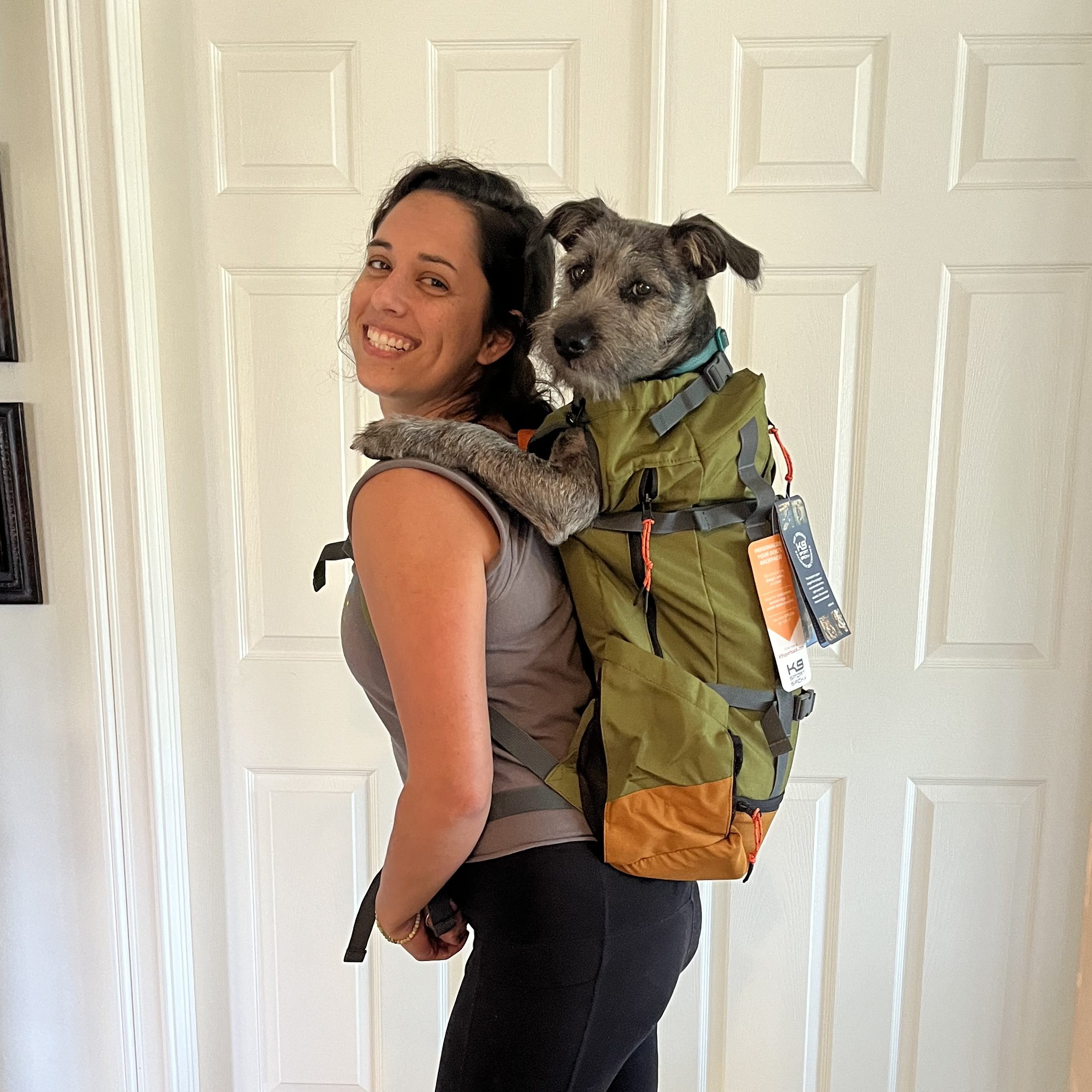
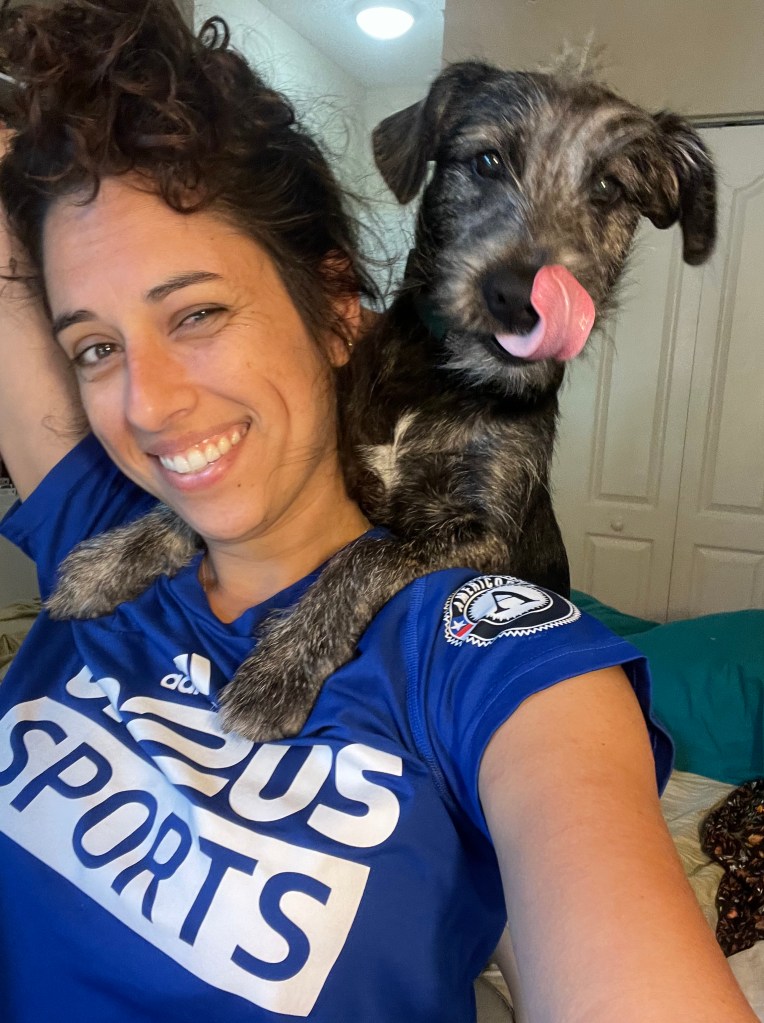
And me? I am an inquisitive seeker, compulsive dreamer, wandering wonderer, and forest thinker who just moved from Miami, FL to Raleigh, NC with her pokémon pup. His name is Barley. He is a very, very cute Sour Patch Dog born in the Virgin Island of Saint Thomas, and a former refugee at the Paws 4 You Rescue who loves to eat carrots, play fetch, and cuddle. He has a story, and he’s not just his breed.
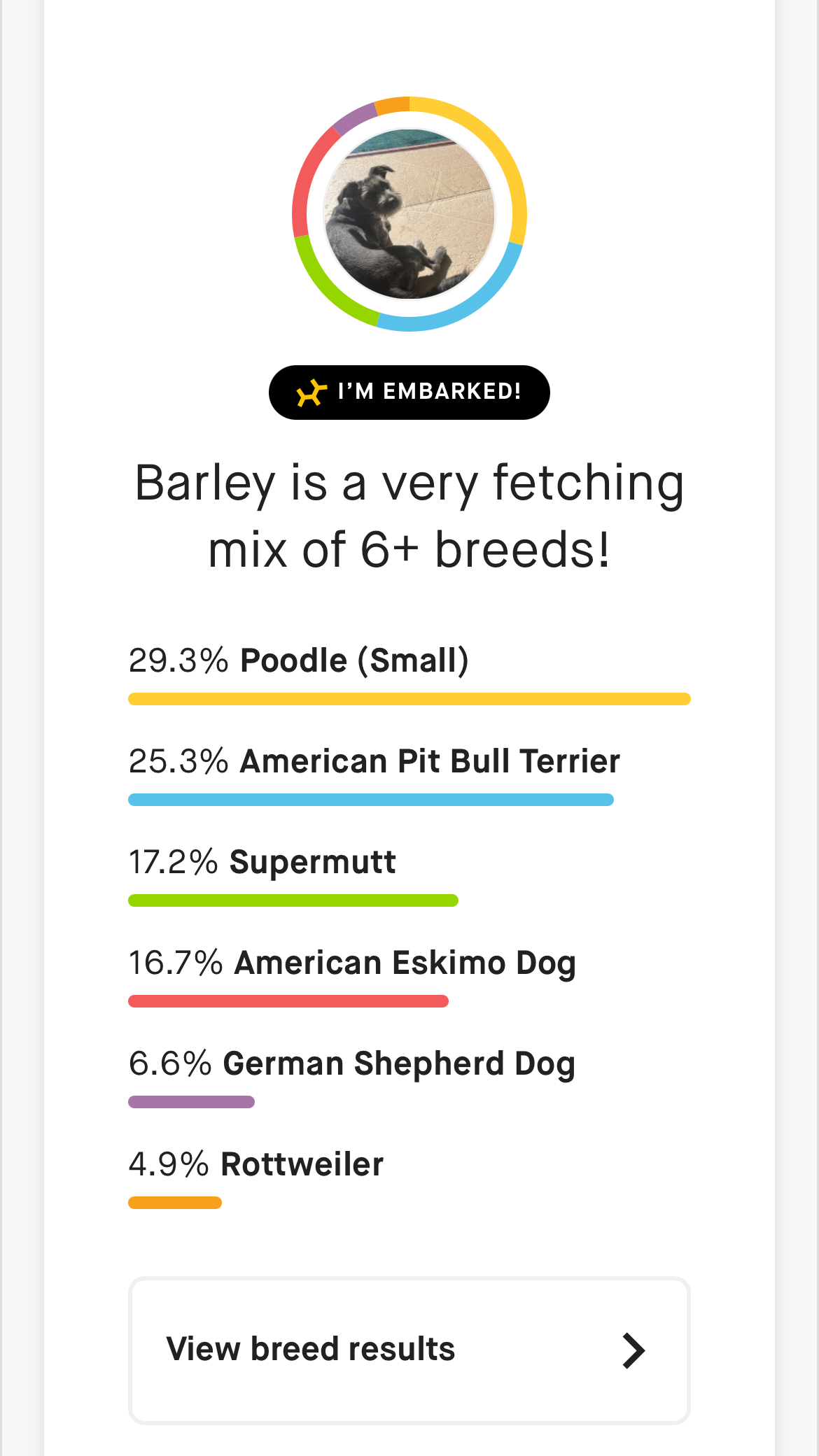
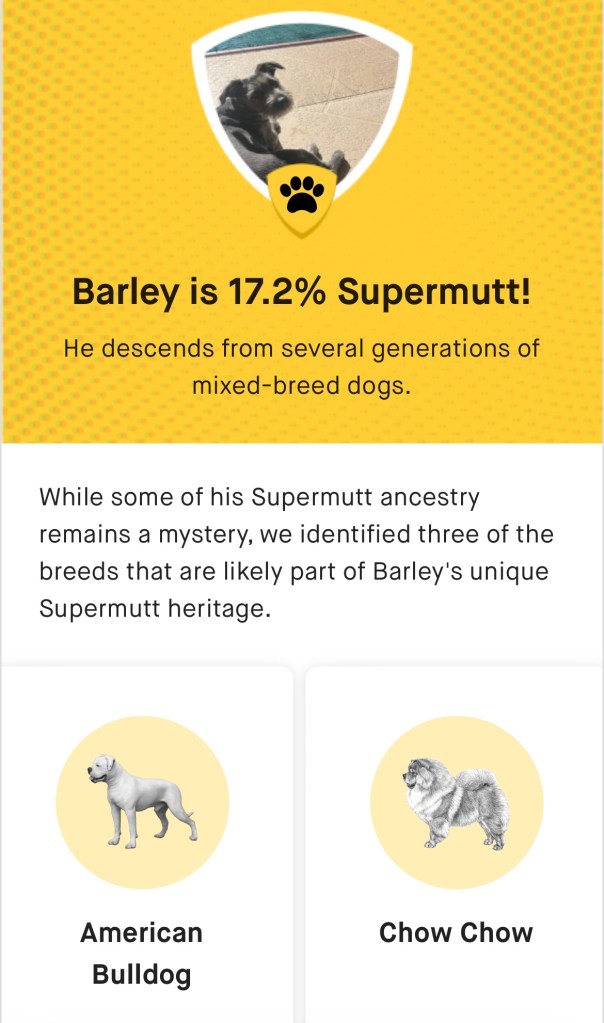
Speaking about breed again, I did eventually do the Embark DNA test for dogs. After a month of suspense, Barley’s breed results came back with a 17.2% “Supermutt” classification. Check it out:
So, what kind of dog is he, you ask?
Barley is a Supermutt. A little bit poodle and a little bit German Shepherd. Some amount American Bull Dog and also Rottweiler. Barley is a Chow Chow and an American Eskimo Dog.
At the dog park, Barley looks like a Schnauzer. But he’s not.
Out in the world, I look like I’m Italian. But I’m more than that.
And I would tell people that I’m a Pisces if they asked, but I also might be more like a Capricorn, or Libra, or Sagittarius.
I’m a Supermutt too.
To digress for a moment, I actually don’t mind being asked my ethnicity, or my sign, or even my dog’s breed (anymore). In fact, I’m proud to share the story of my ancestors, or that I’m a very Saturnian water sign who likes to write, or that Barley’s lineage is comprised of a long (long) history of inter-breeding, making him part super dog. But I think it’s also important to keep in mind that…
People are stories. People are intricate, deep, complex, multi-hyphenated, multi-faceted, and sometimes multi-dimensional beings (and so are dogs). We’re a little bit of everything and a little bit of nothing. We are one, and we are many. We are spiritual–connected through a higher force, and egoic–individually identifiable. We don’t have to label, and then categorize, and then stereotype, and then possibly discriminate against each other.
Instead we can use typology as simply a means to a language that we can experience each other with. To get to know each other with. To share with each other fleeting moments that have meaning beyond words, if we let them.
So… Ask me my sign. Or, don’t.
XXOO,

Disclaimer: I’m actually a huge astrology nerd and love to talk about the stars! In 2022, I completed Level 1 and Level 2 of the Debra Silverman Astrology School. I also love demystifying the language of astrology for folks. If you’re interested in learning more about your birth chart and curious about where to start, would love to connect with you here: leave me a note 🙂
 I will be bliss
Leave a comment